
Mosquito Stations for Your Yard
Our mosquito stations, also called mosquito traps or breeding buckets, stop mosquitoes where they lay eggs. Each station draws in egg-laying females, then sends them back out carrying a larvicide to the hidden breeding spots around your yard. We place the stations, check them every three to four weeks, and refresh them as needed, on their own or alongside our natural mosquito control.
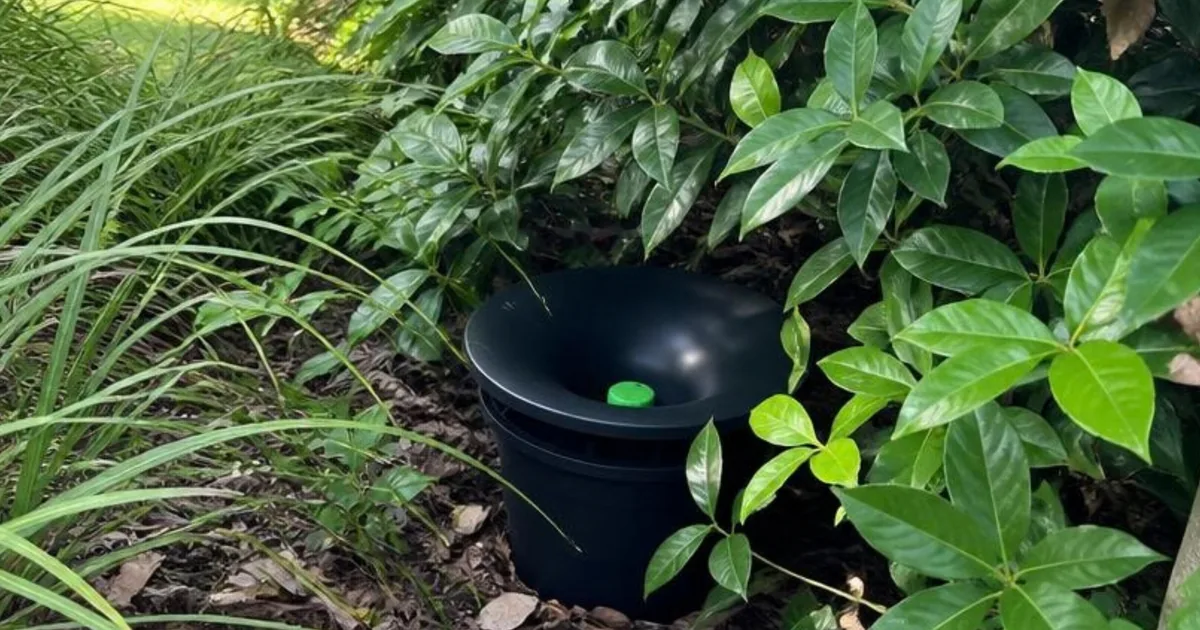
How Our Mosquito Stations Work
-
The lure
A dark station filled with water and an odor lure draws in female mosquitoes looking for a place to lay eggs.
-
The contact
Inside, she lands on a treated gauze strip and picks up two things: a larvicide and a fungus that targets insects.
-
The spread
She flies off and lays eggs in other water around your yard, carrying the larvicide to breeding spots no one could find by hand.
-
The stop
Larvae in the station and in those spots die before they become biting adults, and the fungus ends her life within about one to two weeks.
Why Mosquito Stations Reach Mosquitoes Sprays Can’t
Aedes mosquitoes, including the aggressive daytime biter Aedes aegypti, spread their eggs across lots of tiny water sources: a bottle cap in the mulch, a clogged downspout, the saucer under a potted plant. Many of those spots are hidden, and new ones show up after every rain or irrigation cycle. That’s the gap mosquito stations fill. The mosquitoes themselves deliver the larvicide to breeding sites we’ll never see, and each station keeps working between visits, day and night.
Stations fit right into our low-impact approach. They’re about as targeted as mosquito control gets: nothing is sprayed, the treatment stays inside a closed station or rides on the mosquitoes themselves, and bees and butterflies are left undisturbed. Because stations work on the next generation, many customers pair them with our natural mosquito control barrier treatments for fast relief plus long-term control. Curious about the illnesses mosquitoes can carry? See our mosquito-borne disease guide.
Ready for a plan? Find your local Clean Air Mosquito Control team, or browse our Mosquito and Tick Guides.
What’s Included with Our Mosquito Station Service
Our mosquito stations use an EPA-registered product that has to be serviced by a licensed provider, so this isn’t a buy-it-and-forget-it gadget. Our licensed team handles every step.
Placed Where Mosquitoes Breed
We put stations in shaded, planted areas near where mosquitoes rest and lay eggs. Most yards need two or three stations, and your technician will recommend the right number for your property.
Checked Every 3 to 4 Weeks
We check every station on a three to four week schedule, top off the water, and refresh the treated gauze and lure when needed. That matters in hot, dry climates, where water evaporates fast.
Pairs with Natural Mosquito Control
Stations work on their own or as an add-on to our plant-based barrier treatments. Together they knock down the mosquitoes you have now and stop the next generation.
Natural mosquito control detailsGet mosquito stations at your home
Mosquito station service is available at every Clean Air Mosquito Control location. Find your local team for a free estimate.
Frequently Asked Questions About Mosquito Stations
What is a mosquito station?
A mosquito station, sometimes called a mosquito trap or breeding bucket, gives egg-laying female mosquitoes the kind of spot they look for: a dark container of water. Instead of just catching mosquitoes, each station turns the mosquitoes that visit it into carriers that spread a larvicide to other breeding spots around your yard.
How many mosquito stations does my yard need?
Most residential yards need two or three stations. Larger properties, heavy shade, or a lot of standing water can call for more. Your technician will walk your yard and recommend the right number and placement during your free estimate.
How often are the stations serviced?
We check your stations every three to four weeks and refresh the water, treated gauze, and lure as needed. That schedule keeps every station working at full strength, even in hot, dry weather when water evaporates quickly.
How long until I notice fewer mosquitoes?
Most yards see a real drop after about three to four weeks. Stations target mosquitoes when they lay eggs, not when they bite, so they work by shrinking the next generation. For faster relief, pair them with our natural mosquito control barrier treatments.
Are mosquito stations natural?
Not entirely, and we want to be upfront about it. Our stations use a naturally occurring fungus plus a larvicide, an EPA-registered insect growth regulator used in very small amounts. Everything stays inside the closed station or travels with the mosquitoes themselves, so nothing is sprayed on your yard. If you want a fully plant-based program, ask about our natural mosquito control.
Are mosquito stations pet-friendly?
The stations are built for mosquitoes, not pets. According to the manufacturer, the active ingredients are not toxic to birds or mammals. We place each station in a planted area where kids and pets won’t play with it, and the click-on lid keeps the contents inside. Because the treatment only reaches mosquitoes that go inside to lay eggs, bees and butterflies are left undisturbed.
Can mosquito stations go near my pond or fountain?
No. Following the product label, we keep stations away from ponds, fountains, streams, and other water features, and we never empty station water near a water source. If you have a water feature, your technician will place stations in planted areas away from it and can recommend other ways to manage mosquitoes nearby.
Can I get mosquito stations without spray treatments?
Yes. Mosquito stations work as a standalone service or as an add-on to our natural mosquito control. Standalone stations are a great fit if you want a no-spray option, and combining both gives you the fastest, most complete results.